Reimagining travel that optimizes for spontaneity and exploration
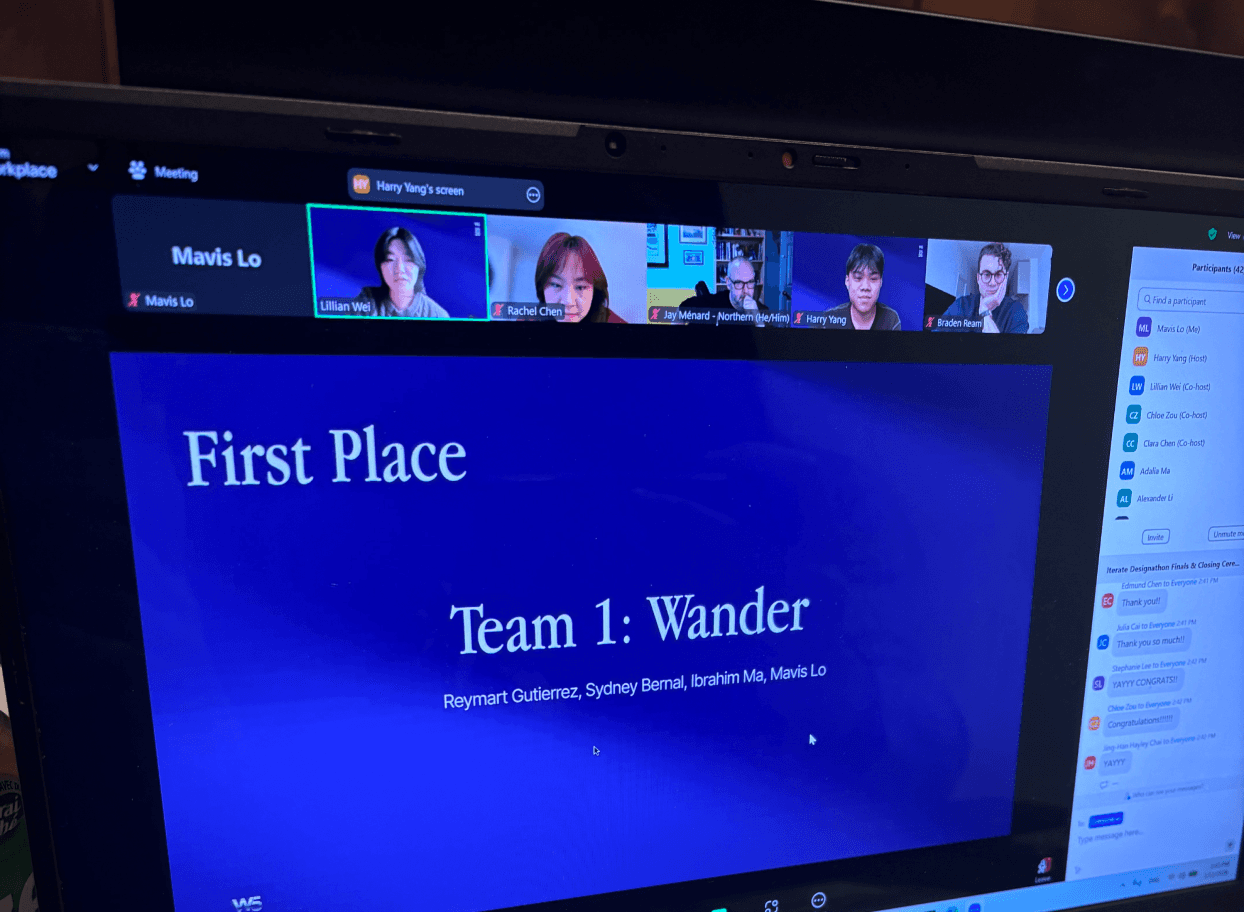
{product design} {1st place} {case study}
Overview
Timeline
36 hours
Role
Product designer
Storyteller
Team
Sydney Bernal
Ibrahim Ma
Reymart Gutierrez
Tools
Figma
In this 36 hour designathon, we were given a unique prompt: How might we address homogeneity in digital spaces to make experiences feel more unique, engaging, and exploratory? Inspired by our collective passion for travel we decided to look deeper into the travel space.
So... what’s wrong with travel?
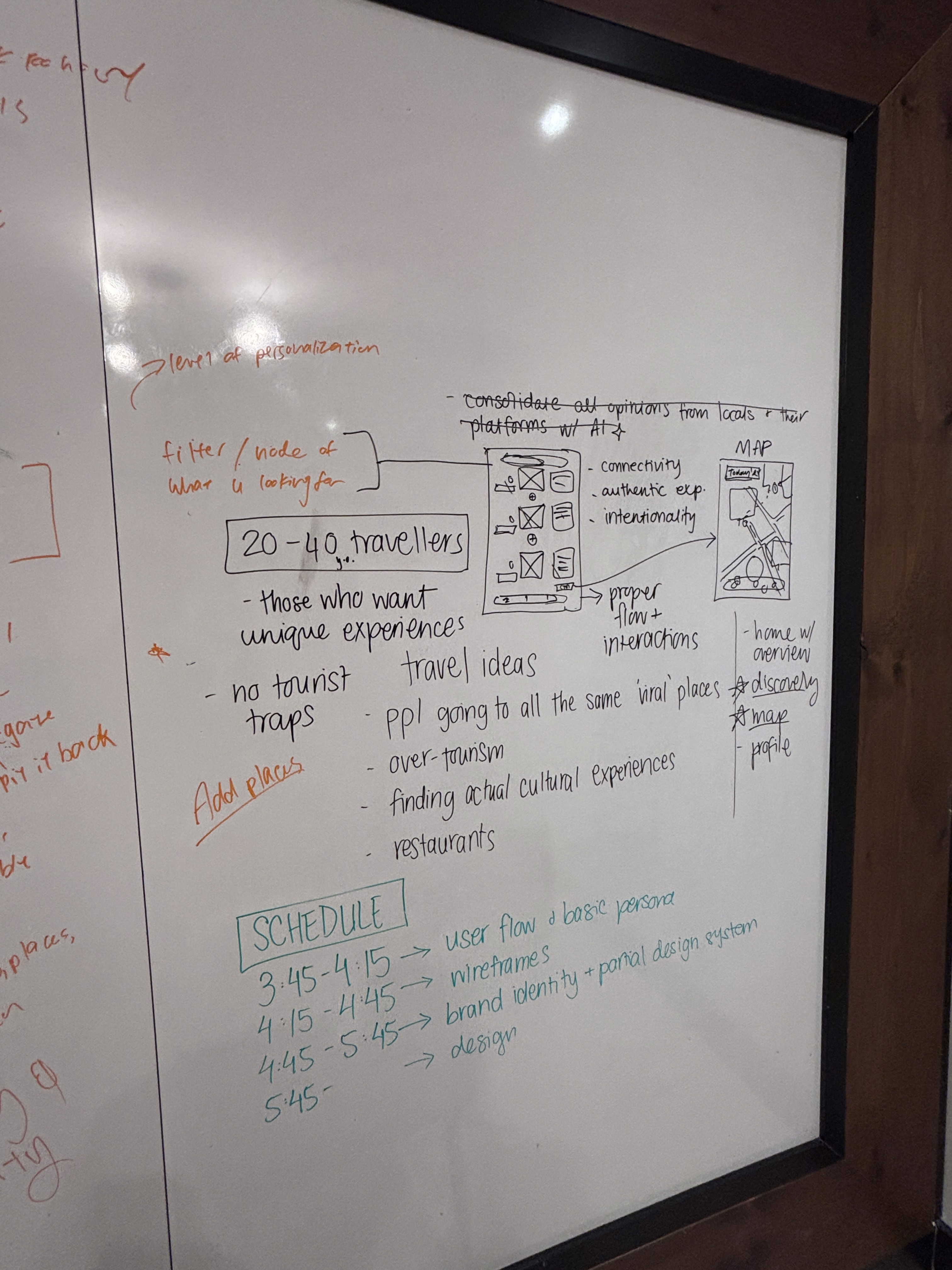
Through 3 user interviews and secondary research, we found a common story.
And they are not alone.
90% of North Americans have fallen for tourist traps at least once in the past 2 years.
Key insight:
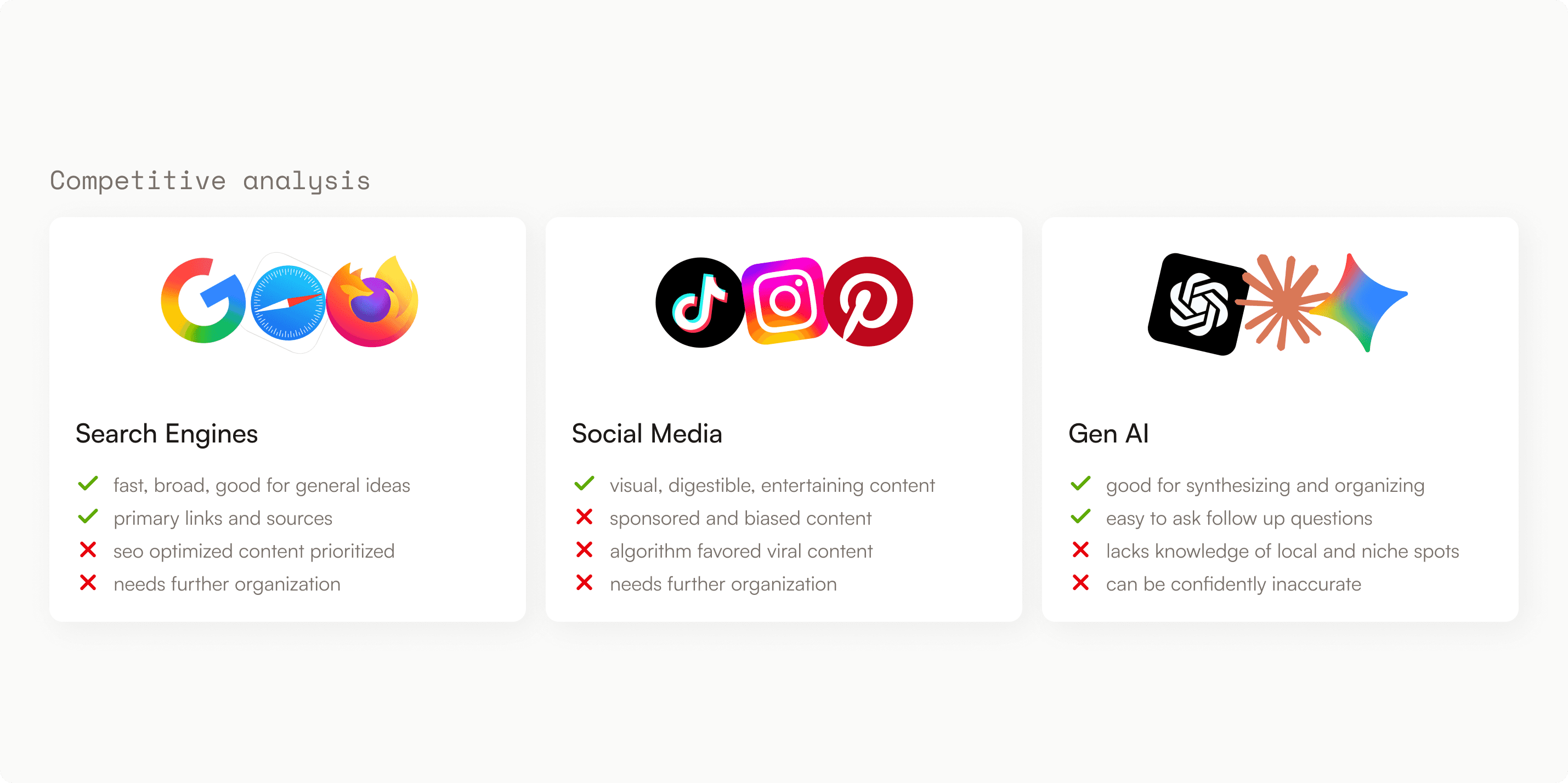
Users want to be spontaneous, discover hidden gems and local spots. They want to support locals while making realistic travel plans.
However, current tools do not have the combination of spontaneity, local knowledge and ease of planning.
Therefore, we set out to create a product that
Encouraged spontaneity and exploration
Is flexible and accommodates user needs
Highlights hidden gems
Easy, fast, and adaptable to changes
Introducing… Wander
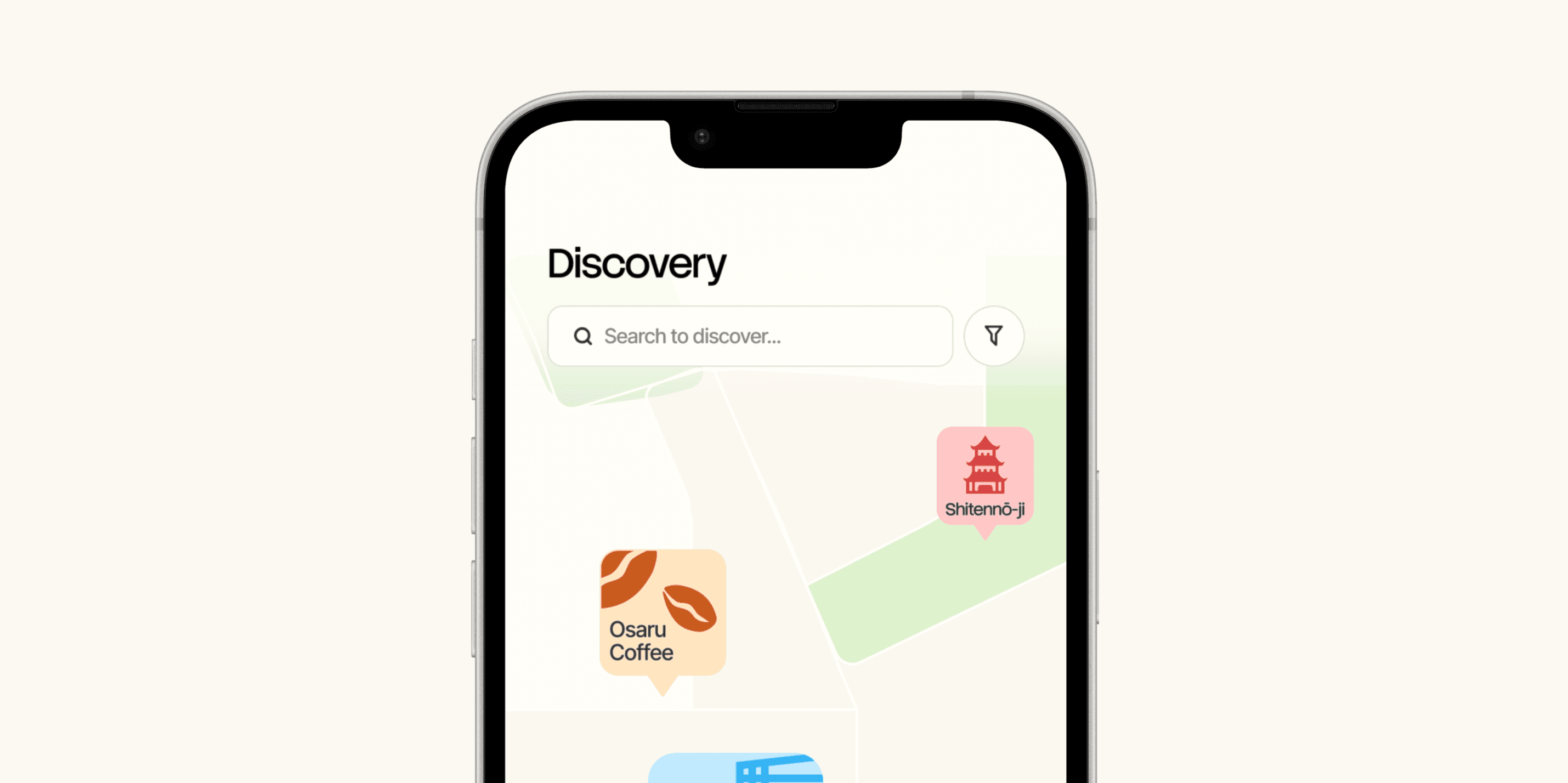
Wander surfaces authentic, local travel recommendation to help spontaneous travelers experience and explore places worth remembering.
Trip planning
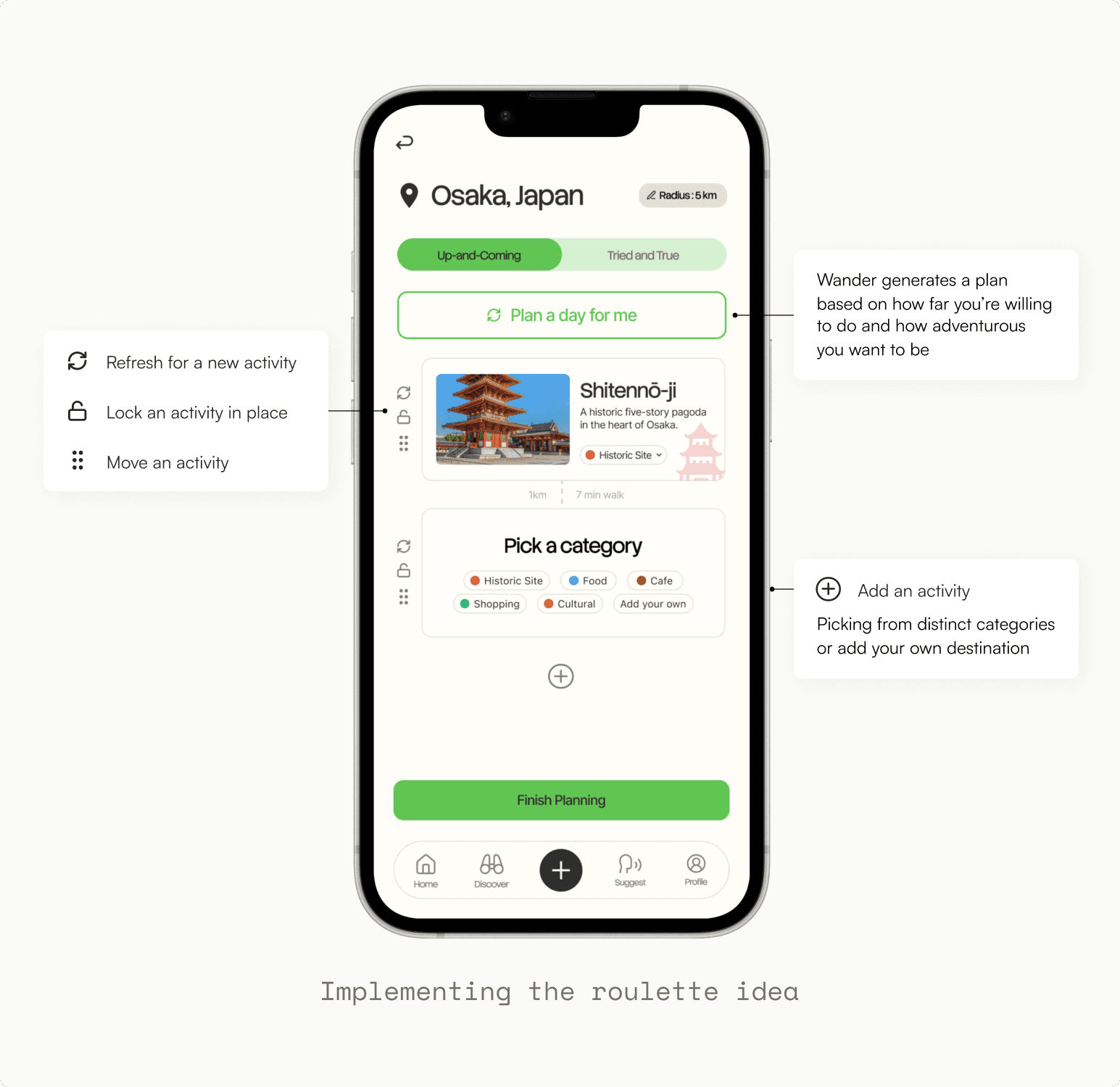
Set your location, pick your radius, and let Wander curate a day of places worth visiting.
Don't like what we found?
Change it! Wander finds a new place in the same activity category or you can change the category and add a place of your own.
In-app navigation
Your stops are mapped with walking distances and times so you always know what's next.
Local discovery
Discover places near you worth visiting as you are on the go.
Community reviews
User-submitted experiences and photos make discovery more trustworthy over time.
How does Wander work?
Behind Wander is a lot of content sourcing
Scraping travel blogs, regional travel sites, community boards etc.
Social signal filtering via keywords with low engagement threshholds
User submitted reviews, moderated for spam before uploading
The main design challenge
How can we give users meaningful control over their preferences while still leaving room for spontaneous discovery?
To answer that question, we first asked
What does spontaneity even look like?
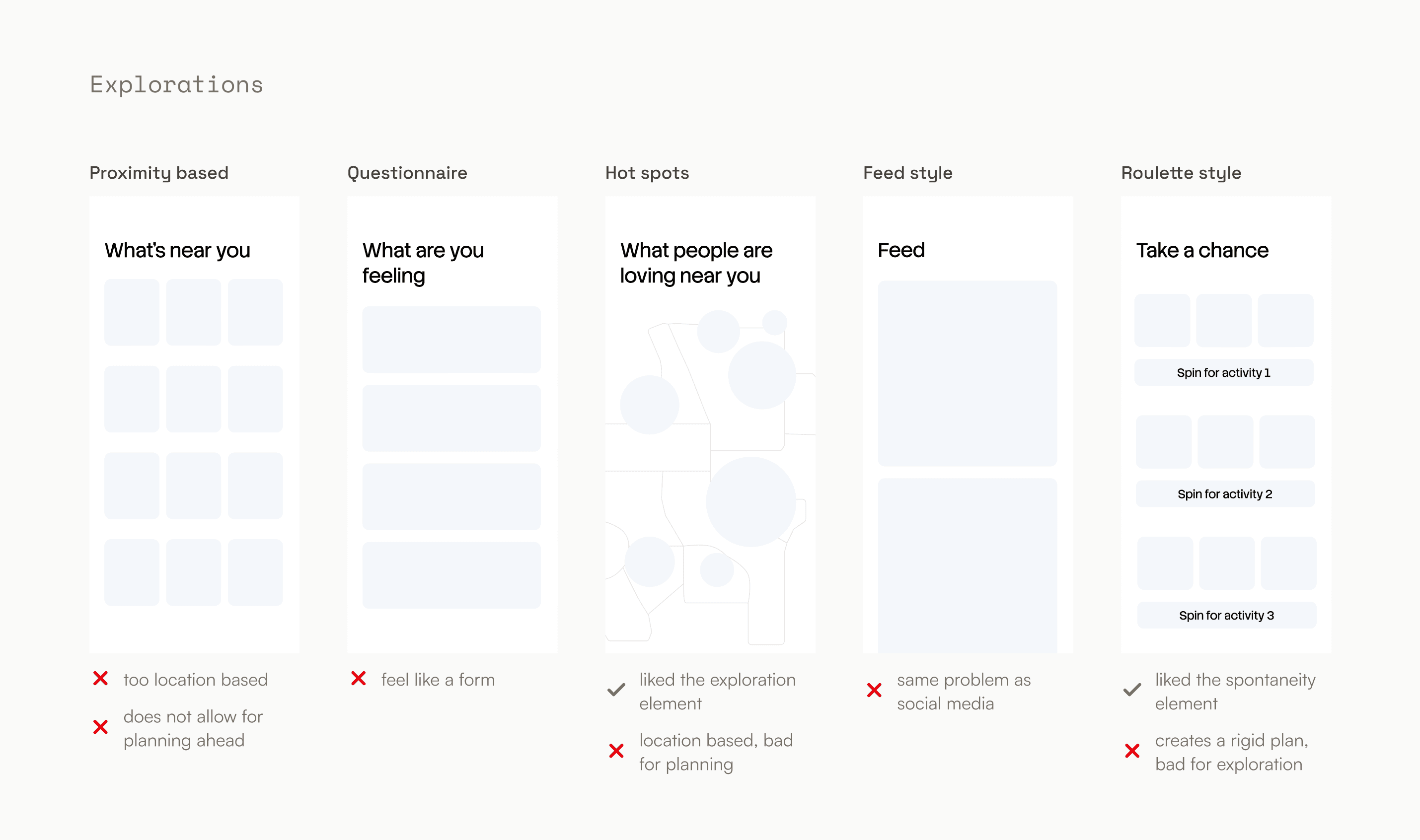
Why we liked the roulette concept
It really embodied the spirit of spontaneity without needing extensive user input creating a unique and engaging experience.
Refining the concept
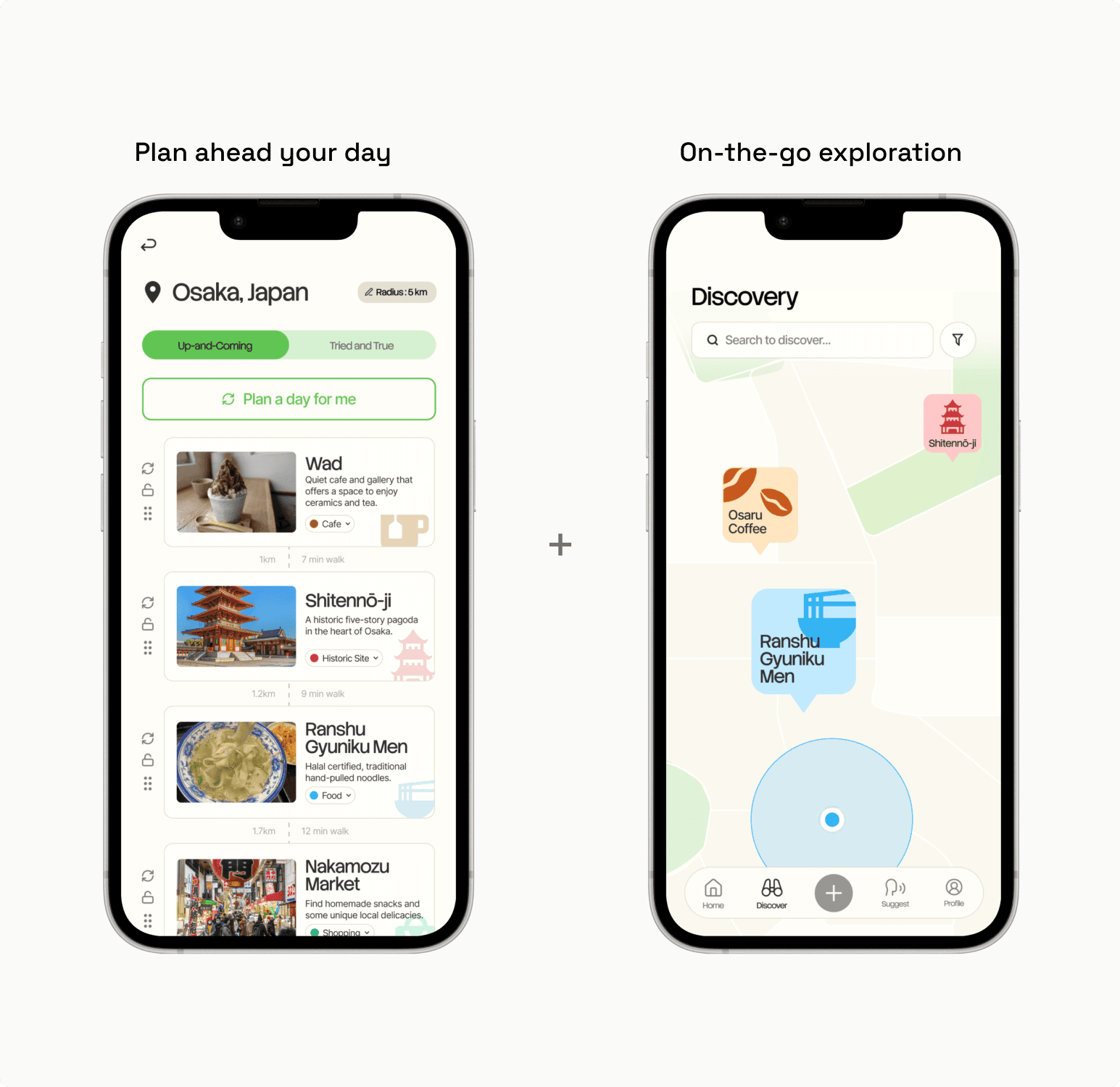
Instead of having users have to spin for every activity, we allow users to generate a whole day in one go. Then users can chose to keep, discard or change the activity. They can also add activities of their choice.
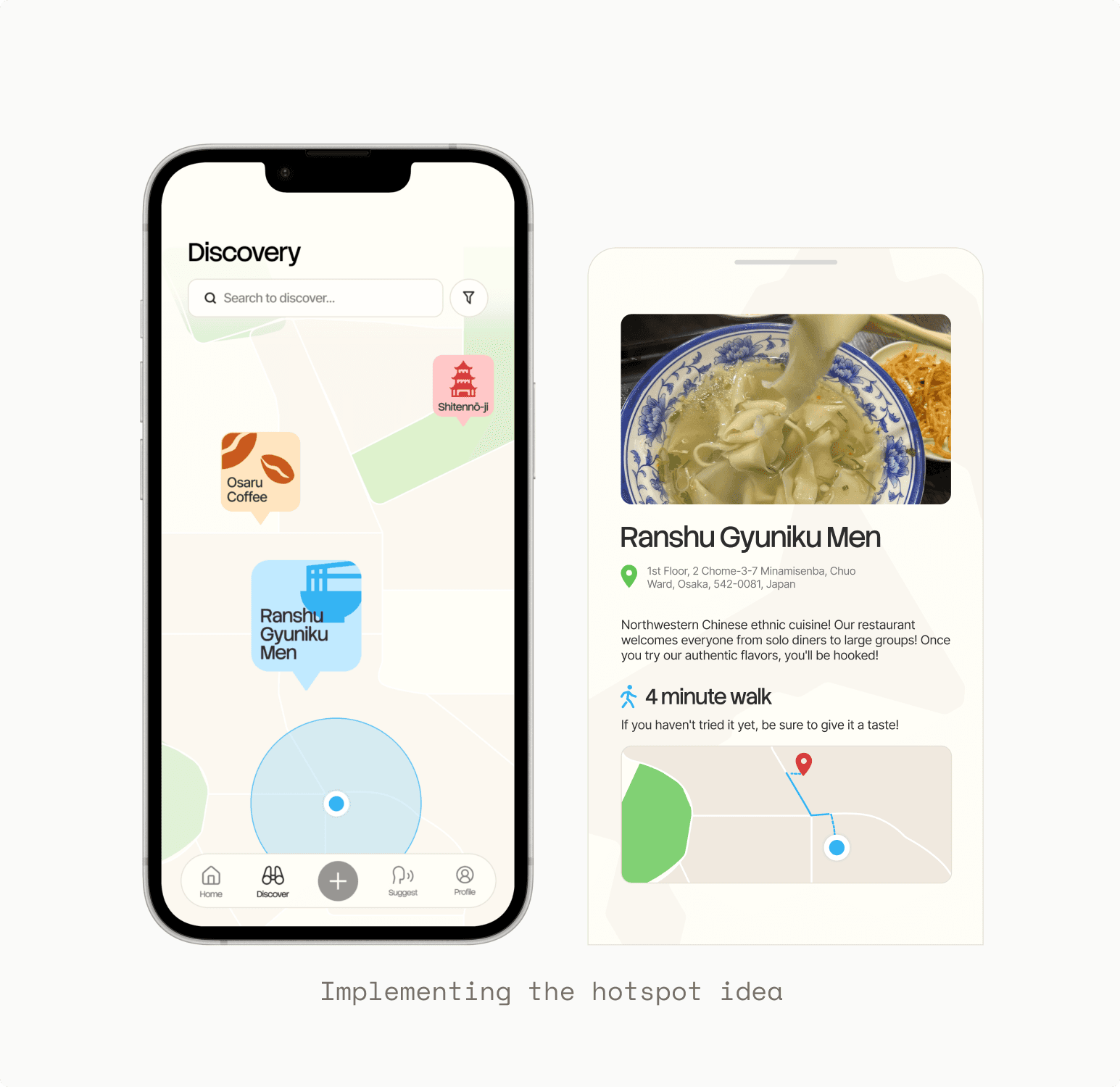
Why we liked the hotspot idea
We liked that it allowed for on-the-go discovery, supplementing trip planning. It responds to where you are in real time and allows you to see what is near you.
Why a combination?
Either feature on its own limits how you can travel.
Not every traveler plans beforehand and not every great moment can be planned. Wander supports both, for when you want to map out your day in advance, and real time discovery when you're already exploring.
On the other hand…
What should users have control over?
Given the time constraint, we had to be selective over what features users have input and control over.
We examined each user concern by asking: Does this user control make discovery better or add friction? We deprioritized features that required a lot of user input and features that can be handled through Wander’s internal curation such as crowds and safety.
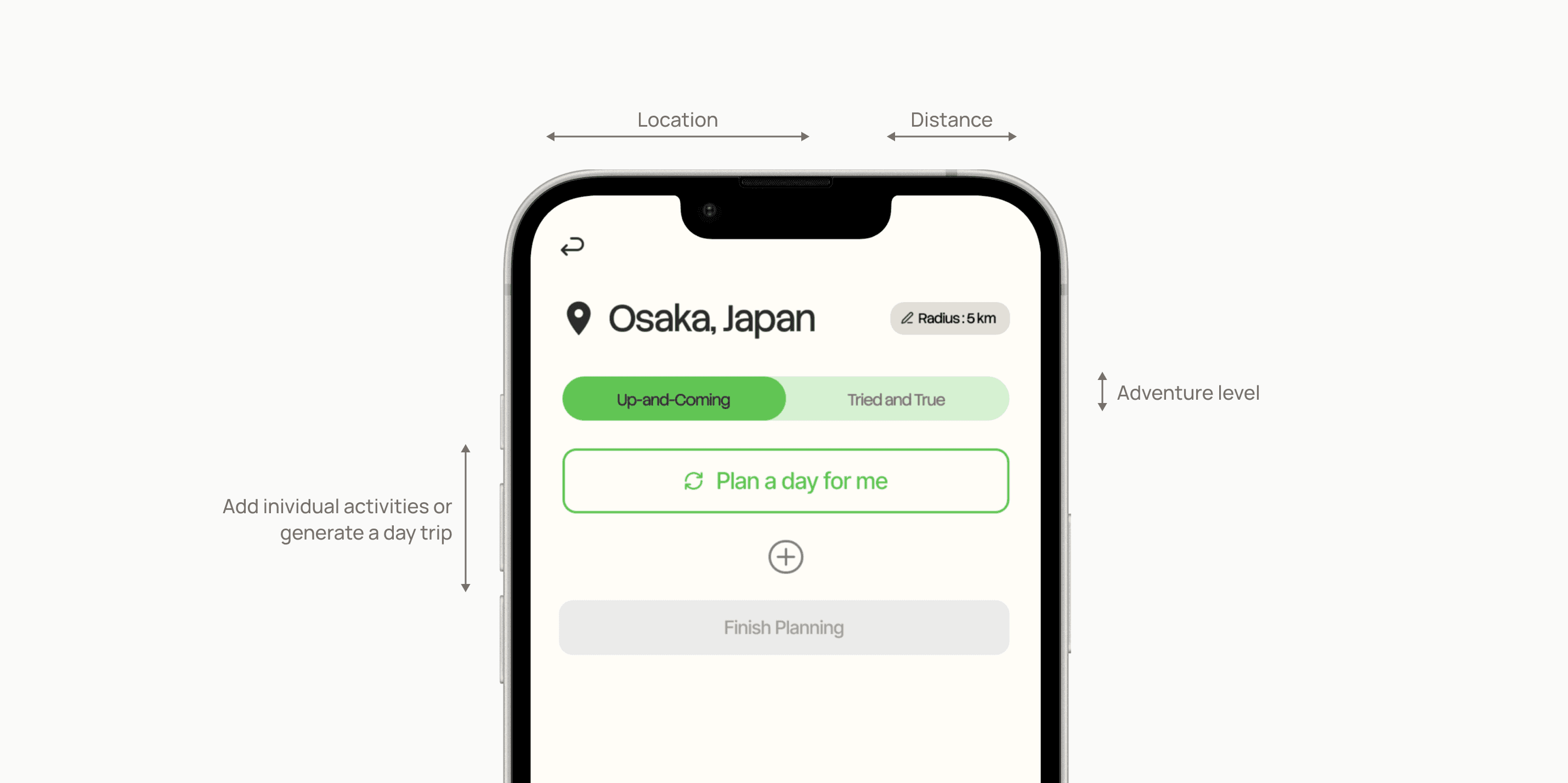
What remained were 4 controls that shape the discovery experience: location, distance, adventure level, and how a day gets built.
Reflections
01
Considering technical feasability
During judging, we were prompted to think about how data is collected and the challenges it will pose. These has allowed me to take a step back and empathize with development and consider the backend architecture. This has since been integrated into every design decision I make.
02
Small problems also matter
Initially, we really struggled with ideation because we thought our problem wasn’t important enough. (we spent 7 hours...) However we learnt that annoyances and frustrations are also valid user pain points! Problems don’t have be be life altering to matter.
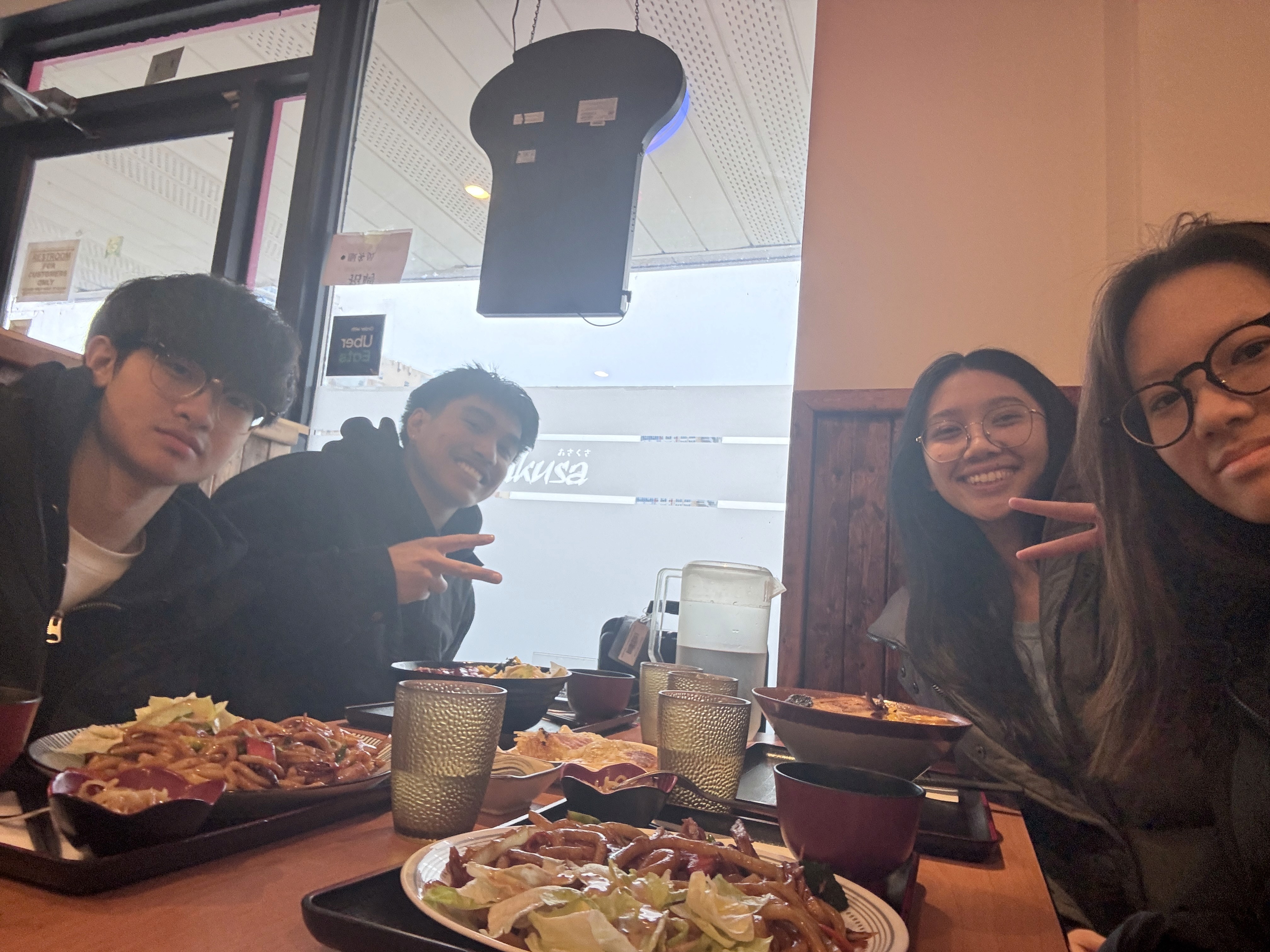
Lastly, grateful to the best team and really incredible judges! Learnt a lot and had so much fun !
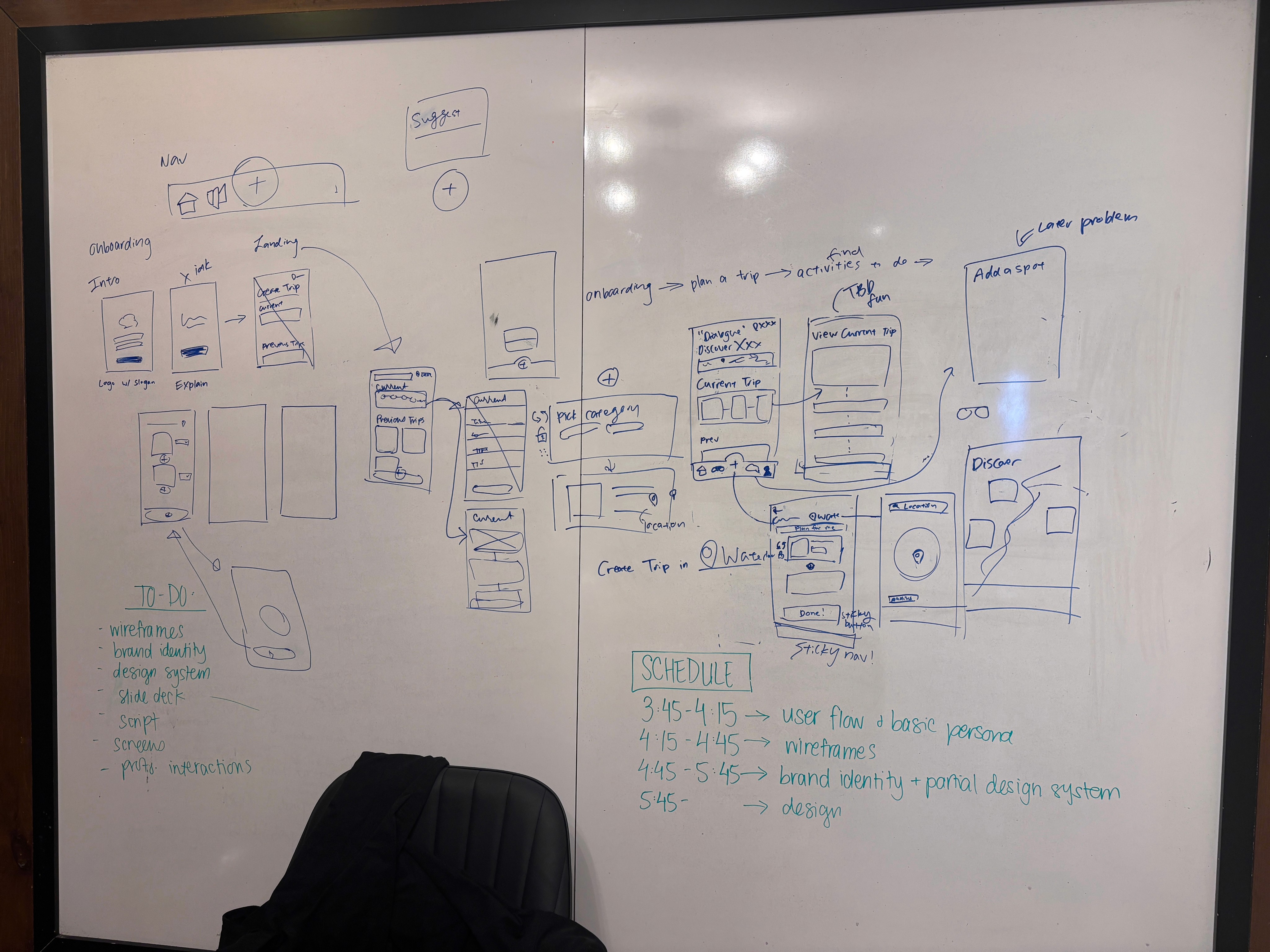
see our paths converging?